magnesium first
Lower density than aluminium with usable stiffness — the reason a 40-gram shell is a geometry problem instead of a wish.

product / 001
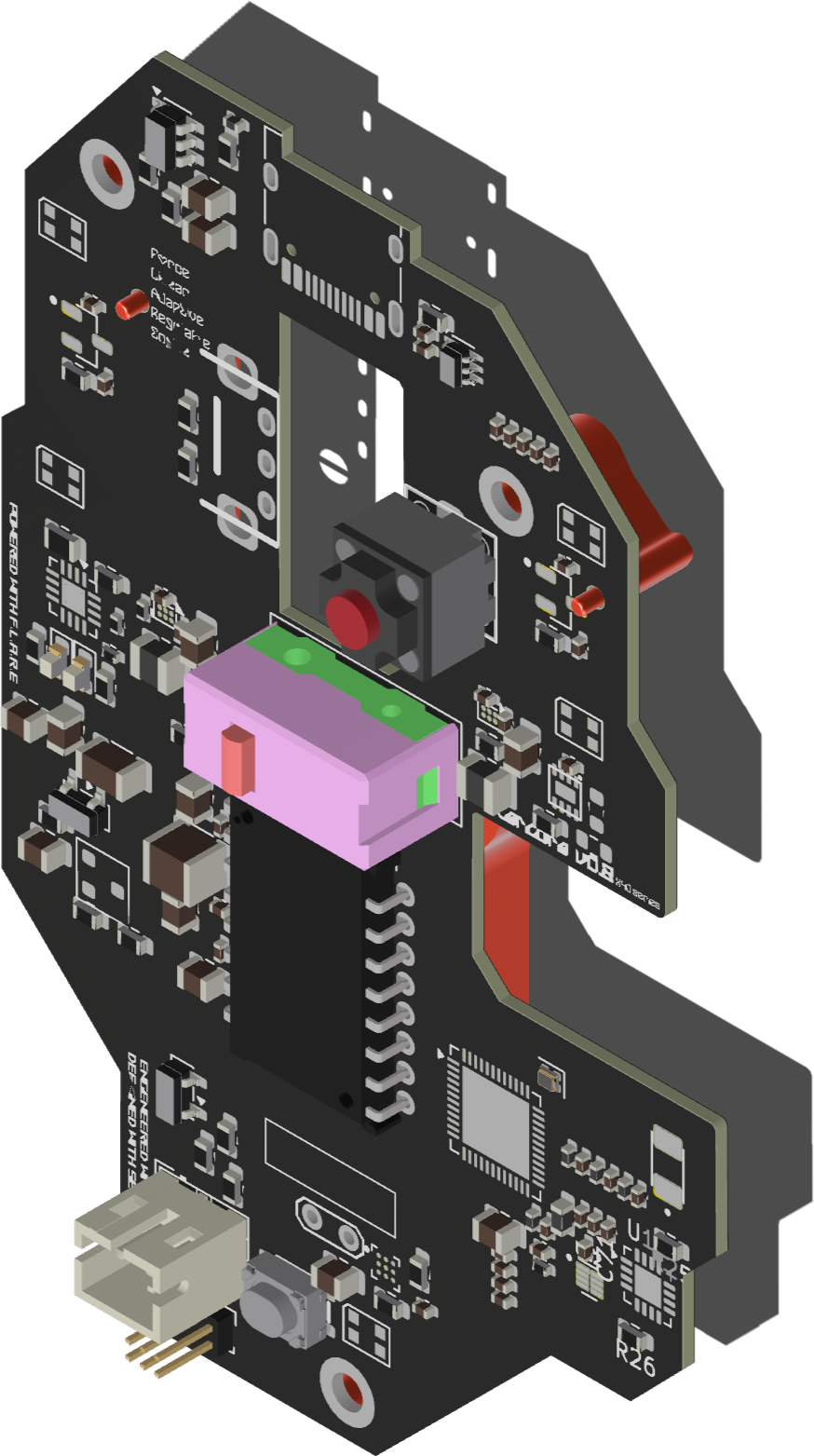
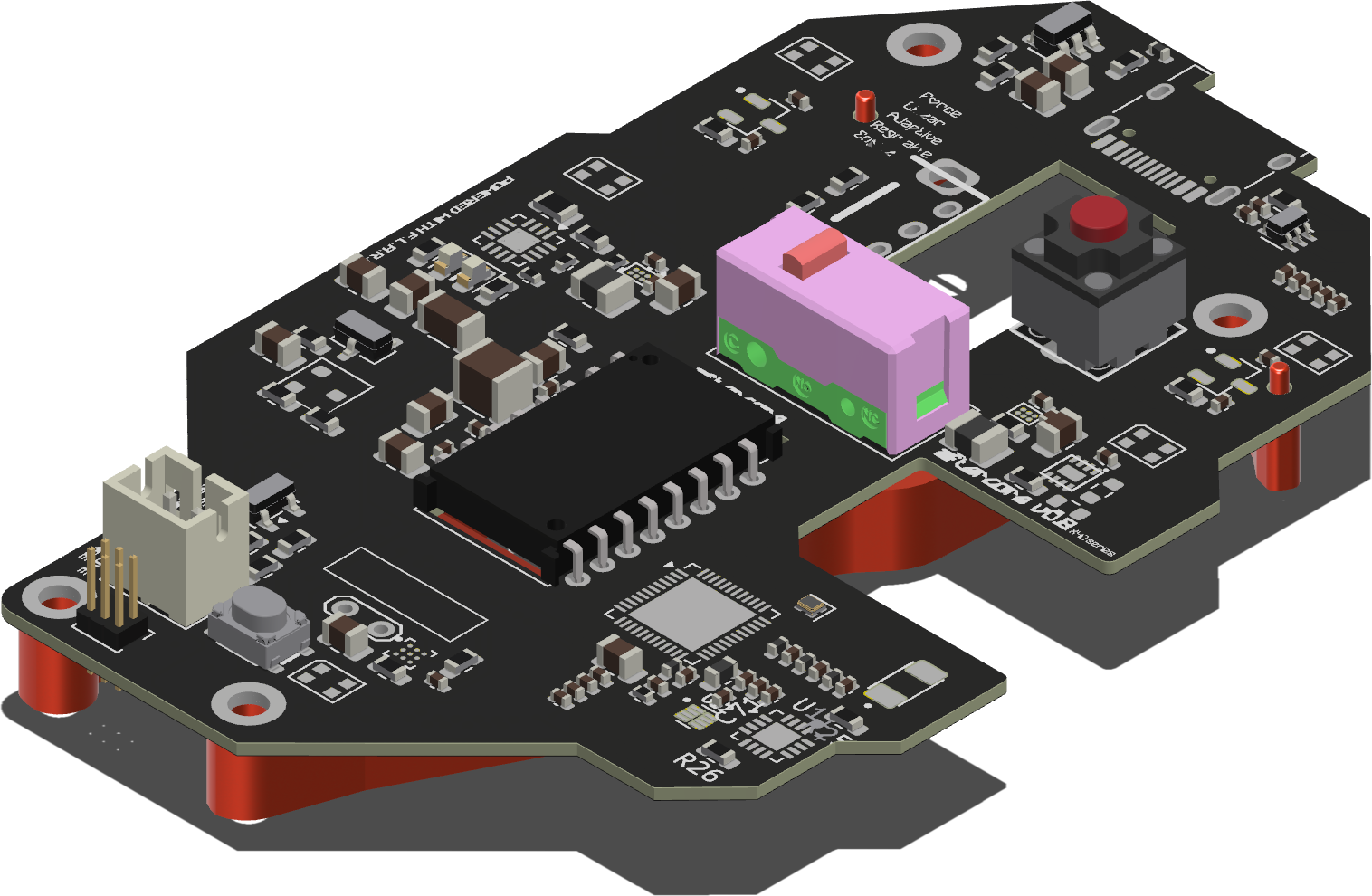
A performance mouse built around one number: forty grams. Magnesium-alloy shell, FLARE magnetic switches, a PAW 3950 sensor at 8 kHz polling. Board designed in house and every revision weighed on the bench before it is called finished.
specification
Published numbers only. The full specification lands when the design is frozen — until then every claim here is one we can back with a part.
PAW 3950 is a PixArt Imaging product. AfterCore is not affiliated with, endorsed by or connected to PixArt Imaging Inc.; all trademarks belong to their owners.
switches
FLARE — Force Linear Adaptive Regulable Engine. Actuation is measured, not sprung: a magnet moves past a sensor on the board and the switch position is read electrically — nothing rubs, nothing browns out, and the actuation point stays a setting instead of a tolerance that drifts.
engineering notes
Four decisions carry most of the mass story. Each one is owned by the same team from sketch to measured part.
Lower density than aluminium with usable stiffness — the reason a 40-gram shell is a geometry problem instead of a wish.
Wall thickness stays thin and uniform; stiffness is bought with ribs, radii and where the section changes.
Outline, mounting and connector placement follow the shell model, so no bracket exists to carry the board — the FLARE sense circuits and the PAW 3950 sit where the fingers expect them.
Printed and machined parts alternate with real boards. Mass and stiffness are recorded on every build.
method
Most of the weight saved in a peripheral is lost in the hand-offs: mechanical assuming the board will fit, the board assuming the shell has room. AfterCore keeps CAD, PCB, materials and prototyping in the same room so those decisions happen once.
talk to engineering// workstreams
Shell, structure, tolerance stack, fastening strategy.
Board outline, routing, the FLARE sensing logic and the PAW 3950 front-end.
Alloy grade, finish, joining, supplier capability.
Mass, stiffness, drop and feel — recorded each build.
// x40g
We put early units with people who will actually weigh them, flex them and tell us the truth.